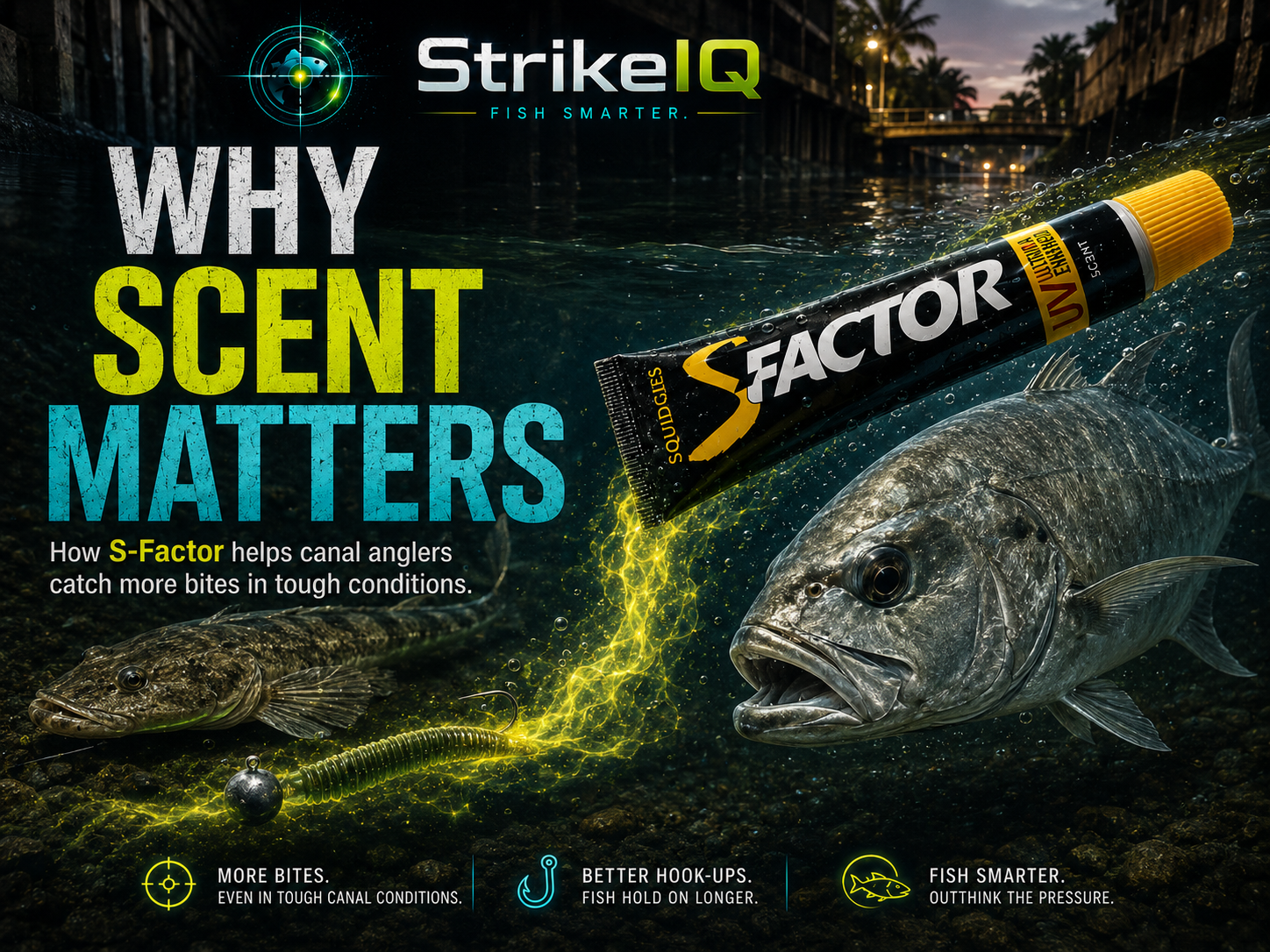
Why Scent Matters: Using S-Factor to Catch More Fish
Most anglers think about lure colour, size, action, tide, wind, structure and time of day. Those things matter, but there is one factor many people still treat as optional: scent.
Fish do not hunt with their eyes alone. They use a combination of sight, vibration, pressure change, taste and smell to decide whether something is worth eating. In many situations, scent can be the difference between a fish following your lure and a fish committing to the bite.
That is why products like Squidgies S-Factor have become so popular with Australian lure anglers. It is simple, easy to apply, and designed to add feeding and attack triggers to soft plastics and jig heads. Shimano describes S-Factor as a scent made to target Australian fish in Australian conditions, with a mix of attack and feeding triggers designed to help get fish biting.
Fish Use Smell More Than Many Anglers Realise
Fish have a highly developed sense of smell. NOAA notes that olfaction influences feeding, reproduction, migration and predator avoidance in fish. In practical fishing terms, that means scent is not just a gimmick. It is part of how fish interpret their environment.
When a fish is actively hunting, it may see the flash of a lure, feel the vibration of the tail, and then use scent or taste as the final confirmation that the lure is worth eating. This is especially important when fish are hesitant, pressured, sitting deep, feeding in dirty water, or mouthing plastics without fully committing.
Scent will not magically make fish appear where there are none. You still need to fish the right area, right tide, right depth and right structure. But when your lure is already in the strike zone, scent can help turn interest into contact.
What Scent Actually Does
A good fishing scent can help in several ways.
First, it can make an artificial lure seem more natural. Soft plastics have excellent movement, but they do not naturally smell like food. Adding scent gives the lure another layer of realism.
Second, scent can encourage fish to hold on longer. This matters because many bites on soft plastics are subtle. A fish may nip, mouth, bump or briefly grab the lure before deciding whether to reject it. If scent makes the lure feel more convincing, the angler gets a better chance to detect the bite and set the hook.
Third, scent can help mask unnatural smells. Sunscreen, fuel, hand cleaner, plastics, storage boxes and human scent can all end up on a lure. Applying scent gives the fish something more attractive to focus on.
Finally, scent creates a small trail in the water. Research on bait attraction has shown that olfactory stimuli can attract fish and that current helps distribute scent from a bait source. This is why scent is especially useful when fishing current lines, drains, bridge pylons, rock walls, canals, weed edges and bait-holding structure.
Why S-Factor Works So Well With Soft Plastics
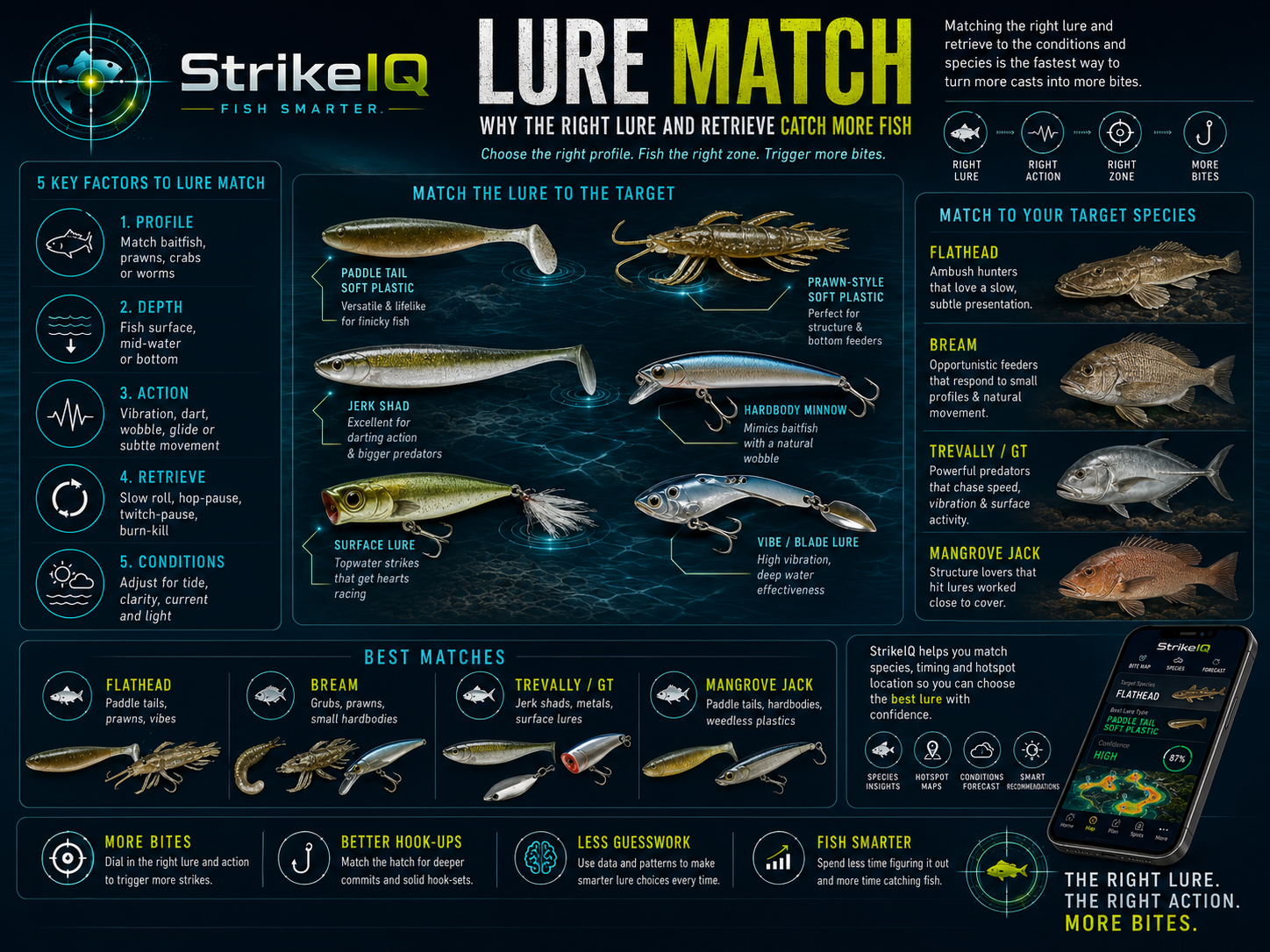
Soft plastics are already one of the most effective lure types because they can imitate prawns, baitfish, worms, small crabs and injured prey. Their movement gets attention. Scent helps complete the illusion.
S-Factor is particularly useful because it is easy to apply directly to the lure or jig head. Shimano’s S-Factor comes in a 35ml tube and is designed so anglers can apply it without making a mess of their hands. That matters on the water because scent only helps if you actually use it consistently.
For Australian species such as flathead, bream, whiting, mangrove jack, trevally, mulloway, tailor and snapper, scent can be valuable when fishing soft plastics slowly through likely holding areas. These fish often inspect a lure before eating it, especially in clear water or heavily fished systems. Scent gives them one more reason to commit.
When Scent Makes the Biggest Difference
Scent can help at any time, but it becomes especially useful in tougher conditions.
On slow bite days, fish may follow or tap a lure without eating it properly. Adding S-Factor can help make the lure feel more like food rather than just something moving through the water.
In dirty or low-light water, fish rely more heavily on vibration, pressure and chemical cues because visibility is reduced. A scented plastic gives fish more to track and assess.
Around structure, scent is also valuable. Bridge pylons, pontoons, drains, rock walls and canal edges often hold fish that are waiting for food to come past. A scented lure worked slowly through these zones can stay in the strike zone longer and present a more convincing target.
It is also useful when fish are short-striking. If you are getting taps but not hooking up, scent can help encourage fish to hold on for that extra moment.
How to Use S-Factor Properly
The key is not to overthink it. Apply a small amount of S-Factor to the body of the soft plastic and around the jig head. Spread it lightly so the lure has an even coating.
Reapply after several casts, after catching a fish, or after fishing through heavy current, weed, sand or structure. If the lure has been washed clean, it is time to add more.
Use it especially when slowing your retrieve. Scent is most useful when the fish has time to inspect the lure. Long pauses, small hops, slow rolls and bottom contact all give the scent more time to work.
For flathead, add S-Factor to paddle tails, prawn plastics and curl tails worked along sand edges, drop-offs and drains.
For bream, use it on small grubs, creature baits and prawn profiles around pontoons, bridge shade, rock walls and canal structure.
For whiting, apply it to small worm, yabby or prawn-style plastics and fish them over shallow sand flats, gutters and yabby banks.
For mangrove jack, use it on paddle tails and prawn imitations skipped or cast tight to structure. Jacks often hit hard, but on pressured fish, scent can help when they are following without committing.
Scent Is Not a Replacement for Location
Scent is powerful, but it is not a shortcut around poor fishing decisions. The biggest mistake anglers make is expecting scent to fix the wrong location.
You still need to fish where fish are likely to be. That means paying attention to tide movement, bait, water temperature, current, structure, depth, moon phase, wind direction and seasonal behaviour.
Think of scent as a bite conversion tool. Location gets your lure in front of fish. Lure action gets their attention. Scent helps convince them that what they are looking at is food.
Why Anglers Should Use It
Using scent is one of the easiest upgrades an angler can make. It does not require a new rod, reel, sounder or tackle tray full of lures. It simply improves the presentation you are already using.
For the small cost of a tube, S-Factor can make your soft plastics more convincing, help mask unnatural smells, improve confidence, and potentially turn hesitant bites into landed fish.
Confidence matters too. When you believe your lure is presenting properly, you fish slower, stay focused longer, and work the strike zone more carefully. That alone catches more fish.
Final Cast
Scent should be part of every lure angler’s kit. It is not magic, and it will not make up for fishing the wrong place at the wrong time. But when you are in the right area and fish are nearby, scent can give your lure the final trigger it needs.
S-Factor is especially useful for Australian soft plastic fishing because it is simple, proven in local conditions, easy to apply, and designed around feeding and attack triggers for Australian fish. Used properly, it gives your lure more than just movement. It gives it smell, taste and credibility.
In tough sessions, that extra edge can be the difference between a follow and a hookup.